menu
A medical technology company developing AI-enabled imaging and computational analysis software to improve biomedical image processing and interpretation.
The company supports research- and diagnostics-adjacent applications, enabling faster and more accurate insights for medical R&D and translational research.
Its solutions are designed for advanced imaging-driven analysis and have applications in single-cell and multi-omics workflows.
The company struggled with scaling. Through user interviews, surveys, and data audits, we mapped a complex sales and product setup with an unclear value proposition and ad hoc pricing.
During discovery, we uncovered undefined features, user confusion, and technical debt.
We decided to rebuild the foundations: structure data, clarify value, and define a scaling strategy.
Building on discovery insights, we mapped the value chain and identified 6 ICPs across complex sectors, including research and medical fields.
Through workshops and interviews with current customers, as well as competitor and prospect data scraping, we found that the complex, code-heavy desktop tool hindered adoption.
Users needed a visual, drag-and-drop interface and effortless online access. So, we created a roadmap for a lightweight, cloud-based framework with automated updates and streamlined usability. With this new positioning, we also created improved pricing and a clearer value proposition, ready for scaling.
Developed 6 ICPs and created new sharper use cases
Repositioned product and created a roadmap for cloud-based framework
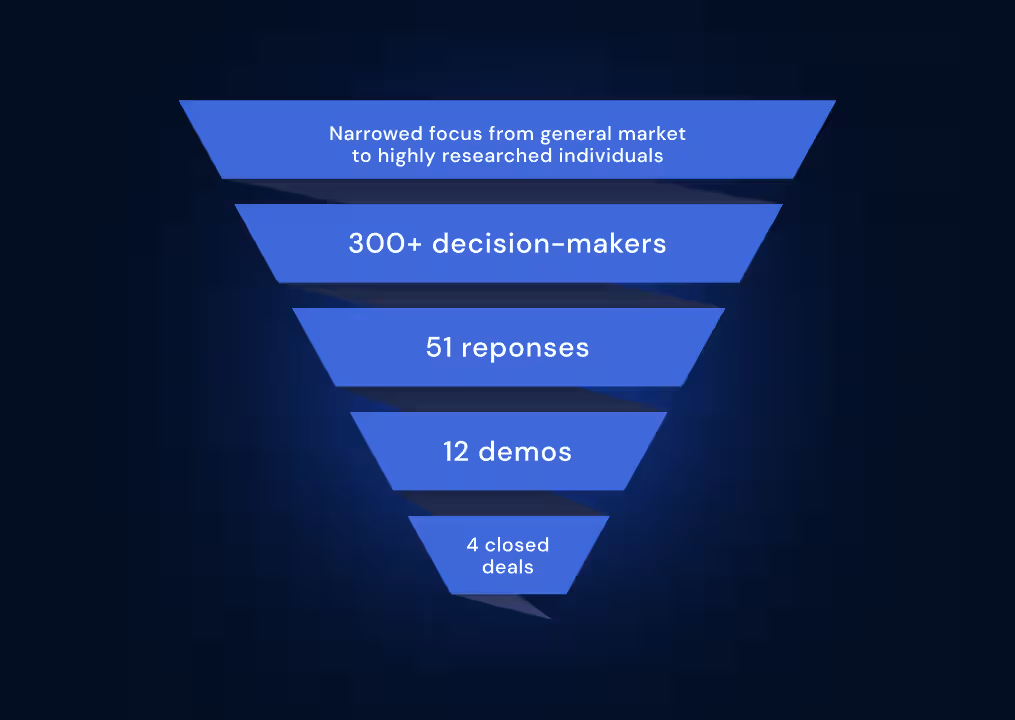
Cold outreach to 300+ decision-makers
Closed 4 deals proving scalability and traction.
Before executing the cold outreach, we validated the new product positioning, pricing, and value proposition through real-world market testing. Then, we turned the validated use cases into targeted, high-impact offers.
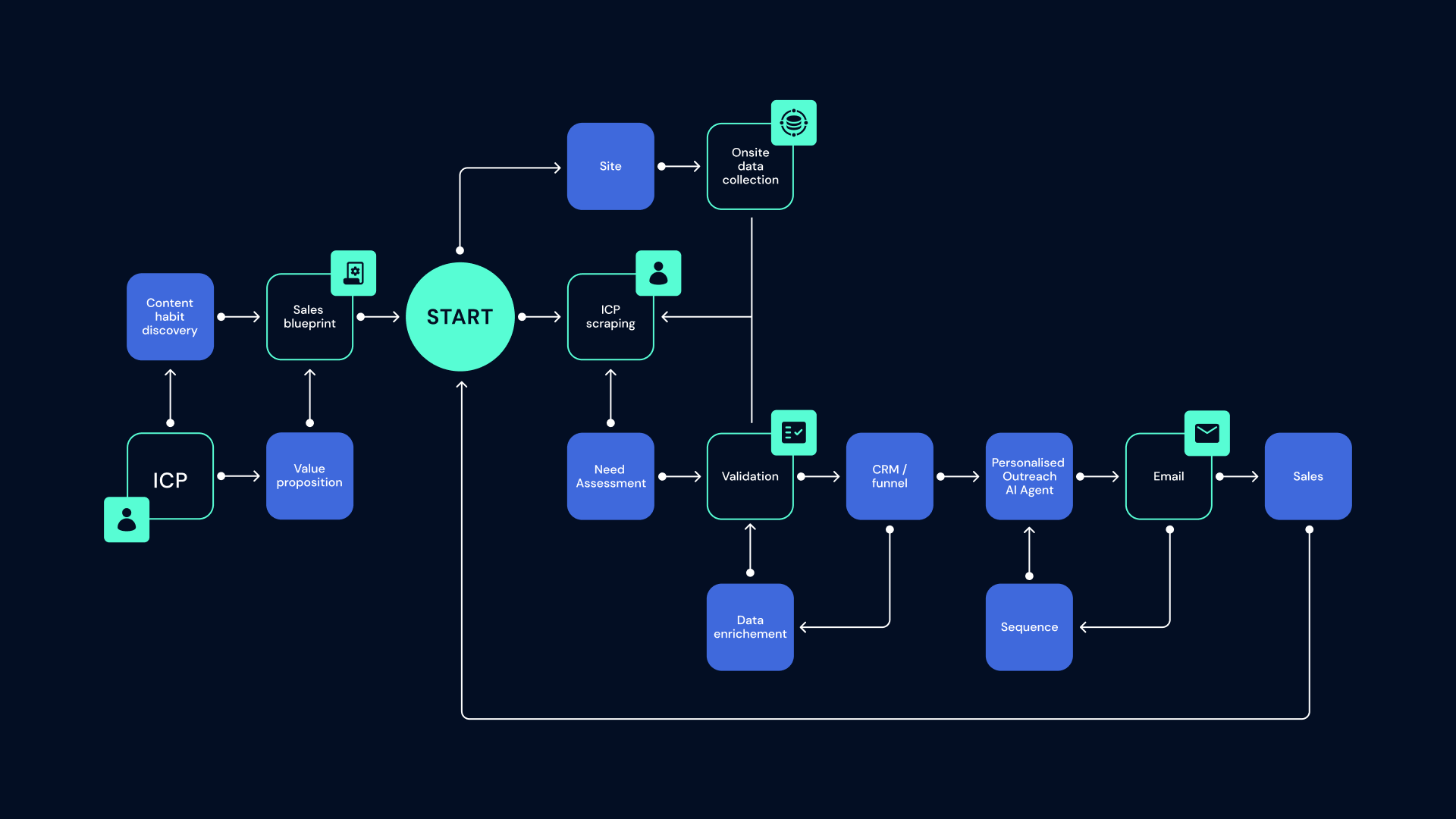
Using reverse-engineered ICPs and AI-powered outreach, we scraped and enriched data from 200+ organizations, mapping 300+ decision-makers.
To reach decision-makers, we launched an AI-assisted personalized campaign, delivering a 17% response rate, 3x the industry average, resulting in 12 demos and 4 closed deals that proved scalability and traction.